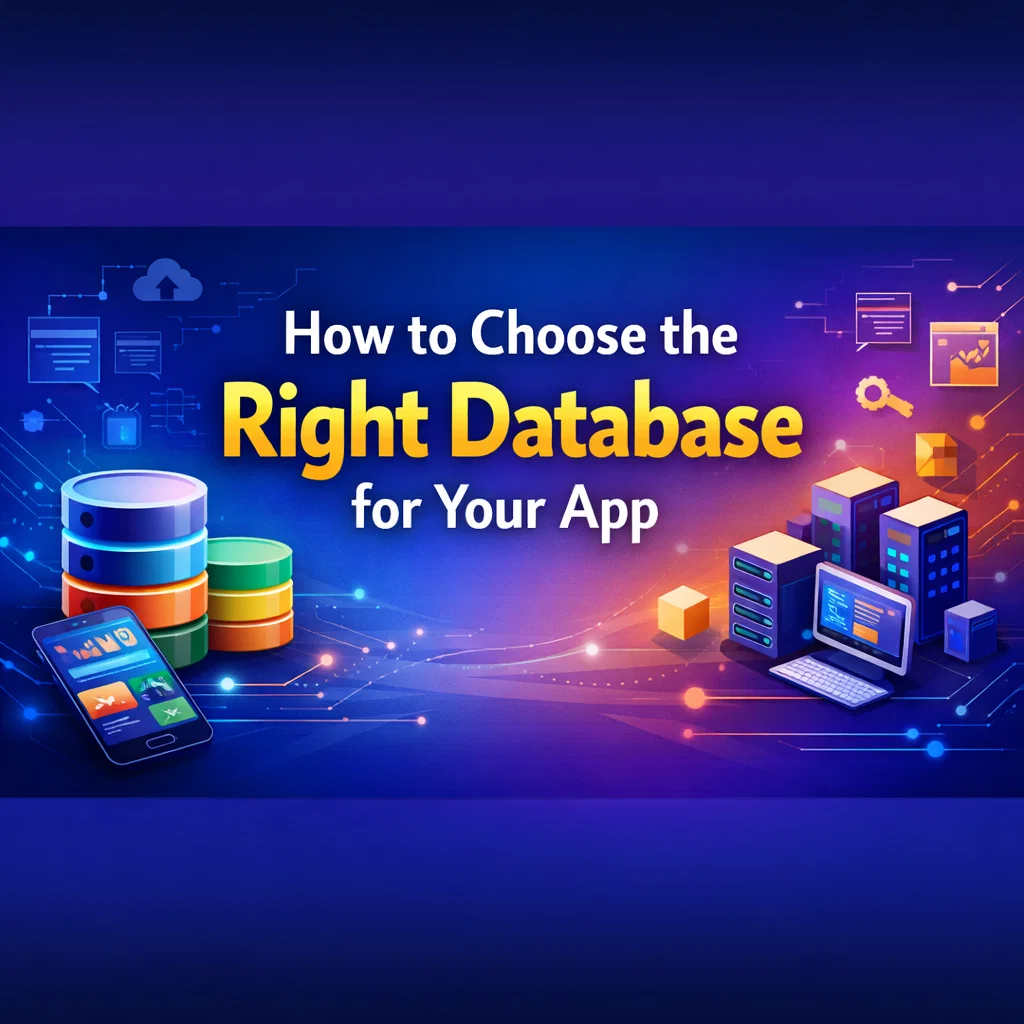
What determines whether an app scales smoothly or struggles under growth? More importantly, what separates a responsive, cost efficient platform from one weighed down by latency and escalating infrastructure costs? In most cases, the answer comes down to a single architectural decision: choosing the right database for your app. As applications evolve, databases are no longer passive storage layers. They now power real time interactions, AI driven personalization, advanced analytics and large scale data processing. The real question is not simply which types of databases are best to use, but whether your choice can sustain performance, reliability and long term growth without becoming a structural constraint.
What Is a Database?
A database is a system that stores, organizes and manages data so an app can access it quickly and securely. It acts as the backbone of both mobile and web applications, powering everything from user logins to transactions and real time updates. For a database for mobile apps, data can be stored in structured formats like tables and rows or in more flexible formats such as documents, key value pairs or graphs. Effective database selection for apps ensures smooth performance, scalability and efficient database management for apps as they grow.
Types of Databases for Apps
Relational Databases (SQL)
Relational databases store data in well defined tables with rows and columns. They follow strict ACID (Atomicity, Consistency, Isolation, and Durability)principles, ensuring accuracy and consistency across transactions. They are ideal for apps that require strong data integrity, complex queries and precise transactional control. Common use cases include e-commerce platforms, banking systems and enterprise grade applications where structured data is critical.
Non-Relational Databases (NoSQL)
NoSQL databases have flexible schemas and can be used to store data in the form of documents, key value pairs, columns or graphs. This enables the apps to be scaled horizontally and deal with large amounts of data effectively. They suit best when it comes to apps that require real-time performance, high availability and extensive scaling. Content heavy applications and IoT systems typically use NoSQL databases for apps as well as social media platforms.
Graph Databases
Graph databases focus on relationships between data points rather than isolated records. They excel at handling interconnected data with speed and precision. They are ideal for social networking apps, recommendation engines, referral systems and any application where relationships drive user experience.
Cloud-Managed Databases
Cloud-managed databases are fully maintained by service providers. They offer built in scalability, high availability and automated backups with minimal operational effort. These solutions are ideal for startups, MVPs and real time apps that need to handle sudden traffic spikes without heavy infrastructure management. They significantly reduce operational overhead and speed up deployment.
Factors to Consider When Choosing a Database
When choosing the right database for your app, several factors should guide your decision:
- Data Structure: Fixed schemas typically require SQL, while flexible data models benefit from NoSQL.
- Scalability: Vertical scaling suits predictable growth, while horizontal scaling supports rapid user expansion.
- Performance: Read heavy apps differ from write heavy or real-time workloads.
- Integration: The database must align with your existing app technology stack.
- Consistency and Transactions: ACID compliance versus eventual consistency depends on business logic.
- Cost and Maintenance: Open source versus paid solutions, self managed versus cloud managed.
- Future-Proofing: Support for AI, analytics and real time data processing is essential.
Recommended Database Based on App Type
- E-commerce and Finance Apps: SQL databases handle secure transactions, while NoSQL supports product catalogs and user reviews, making this combination one of the best databases for apps that require accuracy and scale.
- Social and Content Apps: NoSQL or hybrid architectures, combined with Graph databases for relationship driven features, deliver a scalable database for mobile apps built for high engagement and rapid growth.
- On-Demand and Delivery Apps: NoSQL databases optimized for geolocation and live updates provide a reliable real time database for apps where speed and accuracy are critical.
- Startups and MVPs: Cloud managed databases for fast deployment, scalability and lower operational complexity.
Latest Trends in Databases for Modern Apps
Modern database strategies are evolving rapidly:
- AI ready database for apps enabling advanced personalization, automation and predictive insights at scale.
- Secure database for apps designed to meet strict privacy, compliance and data localization requirements.
- Fast database for apps powered by 5G and edge ready architectures, delivering ultra low latency and real time responsiveness.
- Hybrid database for apps combining SQL and NoSQL models to balance structured data with flexible scalability.
- Cloud-managed databases reduce infrastructure overhead while improving performance, availability and operational efficiency.
Frequently Asked Questions (FAQ)
1. Which database is best for high-traffic apps?
NoSQL and cloud managed databases are often preferred as the best database for mobile apps due to their horizontal scalability and performance.
2.Can NoSQL handle transactional apps?
Yes, modern NoSQL databases support transactional operations, though SQL remains stronger for strict financial accuracy.
3. How can apps ensure database compliance with privacy laws?
By using encryption, access controls, data localization and compliant cloud providers.
4. Is a cloud-managed database better for startups?
In most cases, yes. It reduces maintenance effort and allows teams to focus on product development.
5. How do you choose a database that scales with app growth?
By aligning database architecture with expected traffic, data complexity and future feature expansion.
Conclusion
Choosing the right database for your app ensures consistent speed, reliability and scalability as user demand grows. For the Indian market with various types of databases, considerations like high traffic volumes, multilingual content and data compliance add further importance to this decision. For businesses seeking expert guidance, partnering with a Mobile App Development Company in India simplifies the entire process. Emedia Infosoft is a trusted provider of custom mobile app development services in India, helping businesses select the best database for mobile apps and build high performance apps that meet modern user expectations.

Ravikant
I am Ravi Kant, the Business Head at Emedia Infosoft an Apps Development Company. With over 12 years of experience in mobile app development, I specialize in creating powerful and scalable solutions tailored to modern business needs. My expertise includes Android and iOS app development, cross-platform solutions, UX/UI strategy, agile project management, and business consulting. Over the years, I have led and delivered custom app solutions across various industries, with a strong focus on mobile app development in Gwalior and across India. I believe mobile technology can transform the way businesses operate, and I am passionate about making that transformation seamless and scalable. I am committed to helping businesses grow by harnessing the true potential of mobile technology.