Among the effective ways for growth and a competitive advantage in business today is building a SaaS app. Software-as-a-Service is no longer just a buzzword; it is now a proven business model that guarantees recurring revenue by availing seamless access to cloud-hosted software. One of the most prominent benefits of SaaS applications is scalability: organizations can scale without limit from underlying infrastructure. Easy deployment and automated updates make sure users receive the latest features with minimal fuss. At the same time, developing a successful SaaS application requires careful planning and a well-structured SaaS development process. It needs profound insight into the needs of users and a strategy that outlines long-term usability and performance. From intuitive UI design to picking up the right backend architecture, every little thing will be important for the success of the application. The focus on the right SaaS app components and collaboration with experienced developers will definitely enable businesses to build functional, engaging, secure, and future-ready applications.
What is a SaaS App?
A SaaS application is a software solution delivered over the internet, without the need to install it on local devices. Cloud-based software, as it means, usually uses a subscription model to offer more convenience both for customers and businesses when it comes to updating or paying. Using SaaS applications is possible on multiple devices, ranging from laptops to tablets and smartphones, allowing people to work anytime and from anywhere. Examples of popular ones include Salesforce CRM, Trello, QuickBooks accounting SaaS and many AI-powered SaaS applications. In its core, the SaaS application meaning is about accessibility, cost efficiency, and continuous updates. Its greatest appeal lies in its simplicity: no hardware compatibility or software concerns for users. These SaaS basics make it one of the most user-friendly software delivery models currently available.
Core Components of a SaaS App
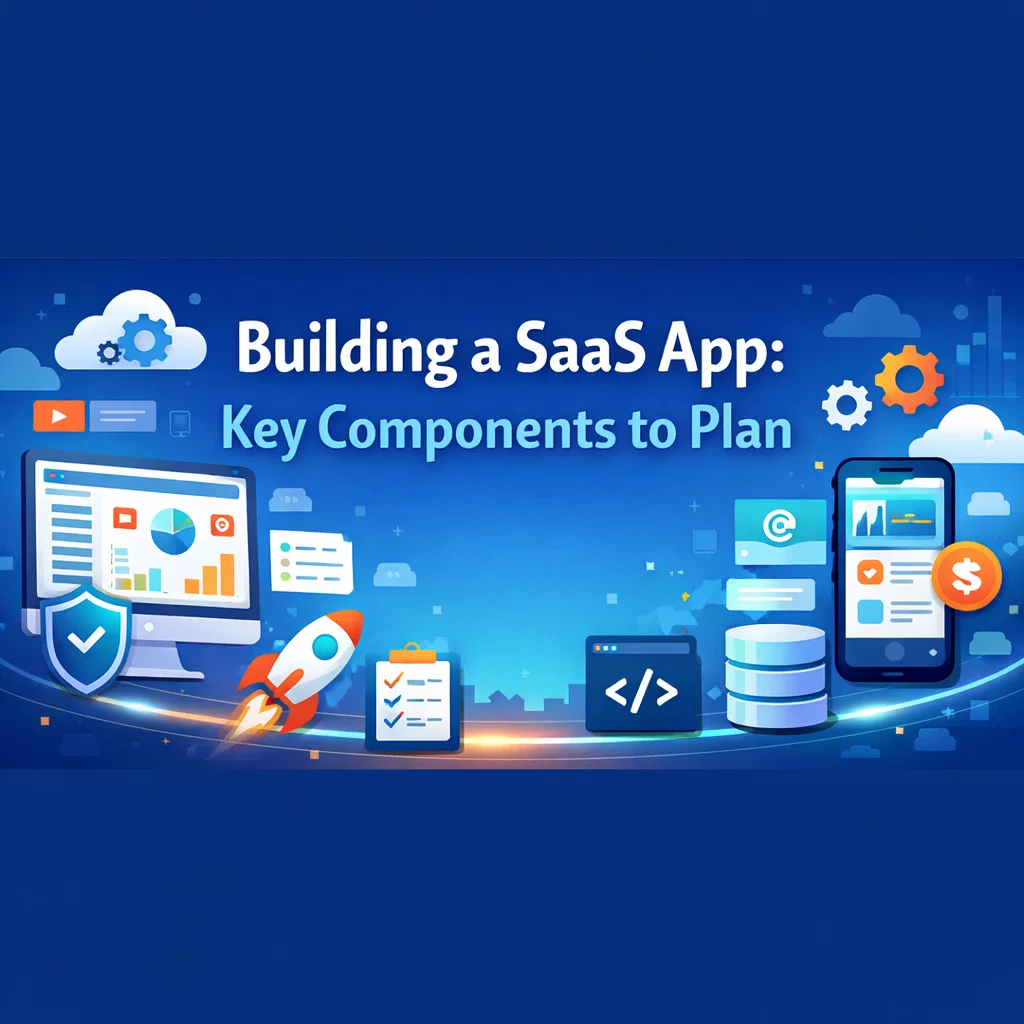
Each successful SaaS application depends on some key components for functionality, security, and usability:
- User Interface (UI) & User Experience (UX): A clean and intuitive interface allows users to easily navigate the app. A good UX design can make complex tasks simple and enjoyable. A friendly user experience increases engagement and reduces churn.
- Back-end and Database: The back-end drives all the processes on the server side, while databases store and fetch data efficiently. Optimized backend systems ensure that the app stays fast and stable under high loads. A strong backend is the backbone of a scalable SaaS platform.
- Authentication and Security: Security is not optional. Authentication provides access to the app for authenticated users only, while encryption and compliance protocols ensure the safety of sensitive information. Tightened security breeds trust among users and keeps the app from threats.
- Billing and Subscription Management: Automated billing handles subscriptions, invoices, and renewals efficiently. It will ensure users can pay effortlessly while businesses are tracking the revenue accurately. Seamless billing operations are at the heart of long-term SaaS success.
- APIs and Integrations: A well-implemented API lets your SaaS app integrate with other services: CRMs, payment gateways, and/or analytics solutions. Such integrations definitely make the app more versatile; moreover, they fit naturally into their workflows. This expands functionality and satisfies user needs.
- Notifications and Communications: These allow for timely notifications, hence keeping users informed about updates, alerts, and important actions through various channels like emails, push notifications, and in-app messaging. Effective communication enhances engagement and strengthens user relationships.
These components will be the basis for SaaS applications that are high-performing, reliable, and easy to use.
Factors to Consider While Planning a SaaS App
SaaS app planning requires considering several important factors. The app should be a scalable SaaS app, growing seamlessly with increased demand from the user base. It is important to decide between multi-tenancy and single-tenant architecture, determining whether multiple clients will share infrastructure or have dedicated environments. High-speed, low-latency performance ensures a high-performance SaaS experience that keeps users satisfied. Efficient planning helps reduce long-term cost and operational overhead. Future-proofing the app by integrating AI, analytics, and mobile readiness ensures it keeps up with emerging market trends. A well-planned SaaS app is scalable, reliable, efficient, and satisfying to its users.
Recommended Tech Stack for SaaS Apps
The selection of the appropriate SaaS app tech stack is necessary for a robust and scalable solution. Frontend frameworks such as React, Angular, or Vue provide dynamic and interactive user interfaces. The back-end options may include Node.js, Django, or Ruby on Rails to ensure flexibility and reliability. Databases manage structured and unstructured data using SQL, NoSQL, and cloud-managed solutions. Hosting on AWS, Azure, or Google Cloud, combined with CI/CD pipelines, ensures smooth deployment and maintenance. A robust SaaS app infrastructure guarantees performance, security, and scalability for future growth.
Latest Trends in SaaS App Development
Today’s SaaS app development is all about making software feel smarter, simpler, and more helpful for real people. Instead of just offering features, modern SaaS products are built to solve problems automatically, using AI to personalize experiences, predict needs, and take repetitive work off users’ plates. Developers are moving away from bulky systems and choosing flexible, modular architectures that grow easily and connect smoothly with other tools. Low-code and no-code platforms are opening doors for teams to build and adjust apps faster, without always relying on developers. Behind the scenes, companies are choosing multi-cloud setups for stability and baking security and privacy directly into the product to earn user trust. There’s also a clear shift toward industry-specific and niche SaaS solutions, paired with fair, usage-based pricing that grows with the customer. Altogether, these trends reflect one clear goal: creating SaaS applications that feel intuitive, reliable, and genuinely supportive of how businesses work every day.
Frequently Asked Questions (FAQ)
- What should be planned before building a SaaS app?
Before building a SaaS app, it is essential to strategize on targeting the right audience, choosing key features, selecting the appropriate technology stack, and deciding upon subscription models. Proper planning ensures scalability, security, and smooth operations.
- How to choose the right database for a SaaS app?
Database selection depends on the type of data, performance needs, and scalability requirements. SQL databases are suitable for structured data, while NoSQL databases handle dynamic content effectively. Choosing the right database is crucial for high-performance SaaS app components.
- Can a SaaS app handle high traffic and real-time updates?
Yes, a SaaS app can manage high traffic and real-time updates efficiently with the right architecture. Leveraging cloud hosting, database optimization, and other strategies ensures the system can scale and maintain performance.
- How can SaaS apps ensure security?
Security in a SaaS app is achieved through strong authentication, encryption, and adherence to compliance standards. These measures protect users and their data, safeguarding the application while enhancing trust and reliability.
Conclusion
An efficiently developed SaaS app promises high performance, scalability, and a seamless user experience. It will anticipate challenges and structure development strategically with a clear vision to avoid costly mistakes. Further, it will enable one to perform updates with ease while scaling smoothly as more and more users come in. Collaboration with the best mobile application development company in India promises the delivery of your SaaS app projects efficiently by expert knowledge using the best industry practices. Regarding unique business requirements for customized mobile app development services, you can always trust Emedia Infosoft. With us, businesses can confidently transform ideas into robust, scalable, and high-performing SaaS solutions.

Ravikant
I am Ravi Kant, the Business Head at Emedia Infosoft an Apps Development Company. With over 12 years of experience in mobile app development, I specialize in creating powerful and scalable solutions tailored to modern business needs. My expertise includes Android and iOS app development, cross-platform solutions, UX/UI strategy, agile project management, and business consulting. Over the years, I have led and delivered custom app solutions across various industries, with a strong focus on mobile app development in Gwalior and across India. I believe mobile technology can transform the way businesses operate, and I am passionate about making that transformation seamless and scalable. I am committed to helping businesses grow by harnessing the true potential of mobile technology.